So many passwords are used everyday. We all are using one for email, for games ,social media ,and even more passwords .Remembering all these passwords is difficult, even for adults. Many people forget them, write them down on paper, or use the same password everywhere. This can be more trouble.
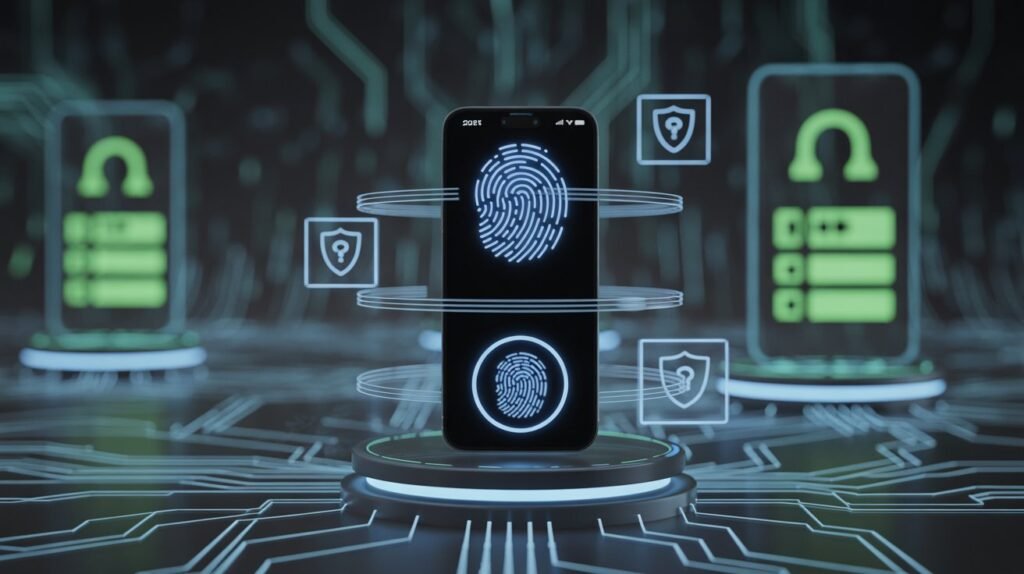
Because of these problems, technology specialists are working on a new idea called the Passwordless future. By the year 2026, so many websites and apps are allowing or wanting to login without entering passwords at all. Instead, they use fingerprints, face scans, and something called passkeys. But this also makes people wonder.
Why Are Passwords Becoming a Problem?
Passwords were created to protect accounts, but over time they have become weak. Many people choose easy passwords or their own name. Hackers know this and use computers to guess passwords very quickly.
Another big problem is scamming. This happens when hackers send fake emails or messages that look real. When people enter their passwords on fake websites, hackers steal them. Because of these issues, passwords are no longer the best way to stay safe online. This is one of the main reasons the passwordless future is becoming important.
What Does Passwordless Mean?
Password less means logging in without entering a password. Instead of remembering secret words, you use something you already have or something that is part of you.
In the password less future, people log in using their fingerprint and also their face
A secure key saved on their phone or computer
This makes logging in faster and easier, especially for children and older people.
What Are Biometrics?
A measurable physical characteristic or personal social feature used to recognize the identity, or verify the claimed identity, of an applicant. No two people have the same fingerprints or face structure. This is why biometrics are useful for security.
Common biometric methods include:
- Fingerprint scanning
- Face recognition
- Eye scanning
- Voice identification
When you unlock your phone using your finger or face, you are already using biometrics. In the passwordless future, this method will be used on many more websites and apps.
How Biometrics Work?
When you first set up biometrics:
Your device scans your fingerprint or face
It turns that scan into a special digital pattern
This pattern is stored safely inside your device
Every time you log in, the device checks if the pattern matches
If it matches, you are allowed to enter. No password is needed.
Are Biometrics Safe?
Biometrics are much safer than passwords in many ways. You can forget a password, but you cannot forget your fingerprint.
Advantages of Biometrics
- Easy to use
- Fast login
- Hard for hackers to copy
- Unique to each person
Disadvantages of Biometrics
- If biometric data is sacked, it cannot be changed
- Face scans may fail in the dark
- Fingerprint scanners may not work if fingers are wet or injured
So, while biometrics are strong, they are better when used with other security methods in the passwordless future.
What Are Passkeys?
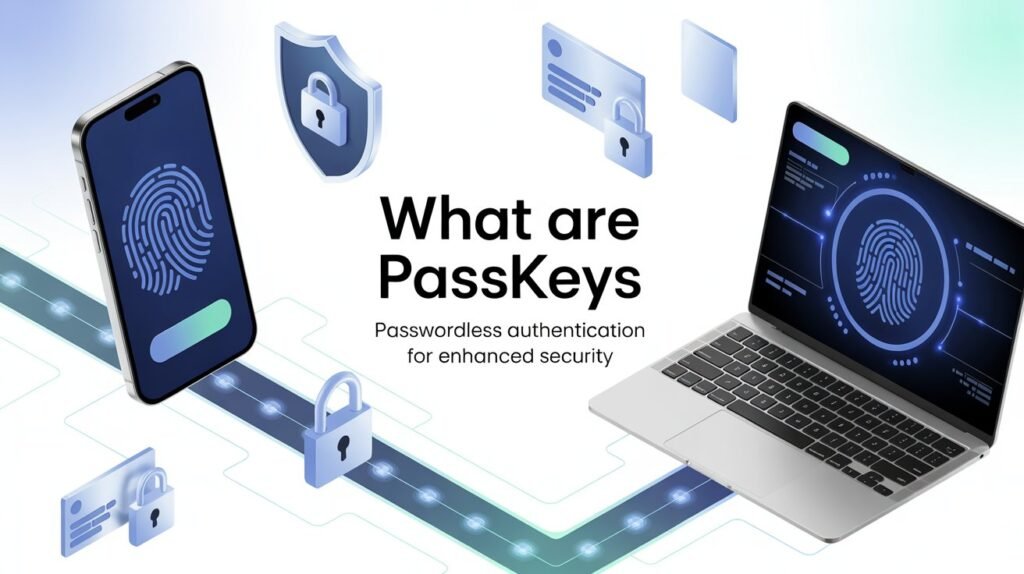
Passkeys are a new and smart way to log in without passwords. They work using a special system called public key technology.When trying to login ,the website checks whether the device has the apt and right key. If it does, you are logged in. No password is sent or typed.
- Passkeys work in some simple methods
- Your device creates two keys
- One key is shared with the website
- The other key stays safely on your device
Why Passkeys Are Very Secure
Passkeys are one of the safest parts of the passwordless future because hackers cannot steal them easily.
Benefits of Passkeys
- No passwords to remember
- Safe from fake websites
- Works only on your device
- Very difficult for hackers to attack
Even if a hacker tricks you into visiting a fake website, your passkey will not work there. This makes passkeys much safer than passwords.
How Biometrics and Passkeys Work Together
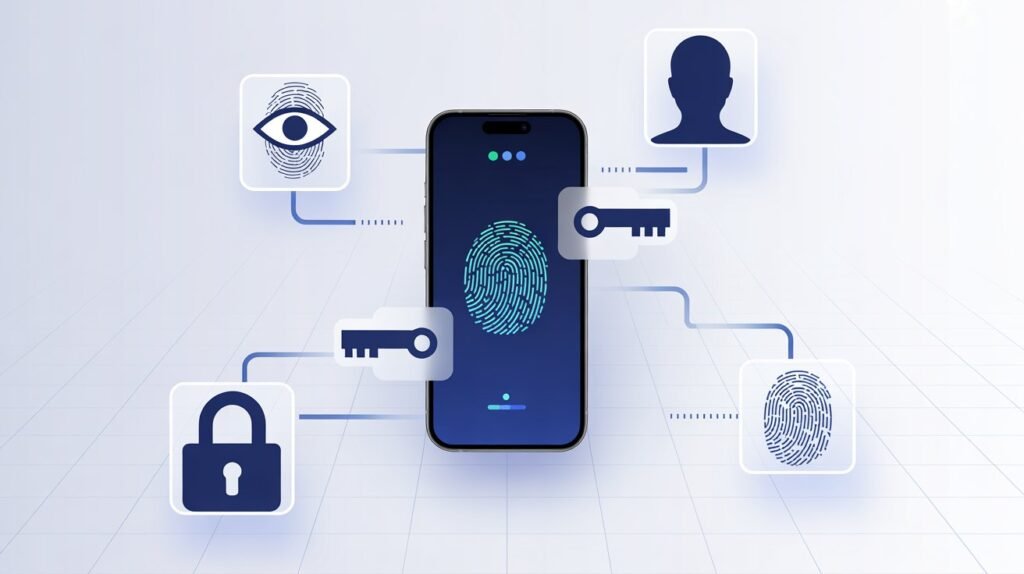
In many systems, biometrics and passkeys are used together.
For example: You open a website and your phone asks for fingerprint or face scan. After approval, the passkey logs you in and This means your body confirms it’s you, and your device confirms it’s trusted. Together, they create strong protection for the passwordless future.
Are There Any Problems with Passwordless Login?
Even though password less login is very secure, it still has some challenges.Possible problems include losing your phone or device,trouble logging in on shared computers,
some old websites may not support passkeys
To solve this, many services allow backup options like another device or recovery codes.
What Big Companies Are Doing
Big companies like Google, Apple, and Microsoft are already supporting passkeys. They are interacting and motivating users to move away from passwords because it reduces hacking and keeps users safer.
By 2026, most popular apps and websites are expected to support the passwordless future as the main login method.
What Authentication Will Look Like in 2026
By 2026, logging in it will be faster, simpler and safer.
Most people will use fingerprints, face scans, and passkeys. Passwords will still exist, but they will be used more often. The passwordless future will make the internet easier to use for everyone, including children.
Are Biometrics and Passkeys Really Secure?
The answer is yes, they are much more secure than passwords when used properly. They reduce human mistakes, stop scam attacks, and protect accounts better.
No security system is perfect, but the passwordless future is a big improvement over old password systems.
Conclusion
The Passwordless future is not just an idea ,it is already happening. Biometrics and passkeys are changing how we protect our online accounts. They remove the need to remember passwords and make online safety stronger. By 2026, logging in will feel simple and natural. Using your fingerprint or face will be normal, and passkeys will quietly protect your data in the background. While there are small risks, the benefits are much bigger .As technology grows, passwordless systems will help everyone stay safer online with less effort and fewer security mistakes.