Deepfake scams are no longer a concept from science fiction movies. They are happening right now, and businesses around the world are paying the price. Imagine receiving a video call from your company’s CEO asking you to transfer funds urgently, but the person on the screen is actually a digital illusion created by artificial intelligence. Scary, right? This is exactly what deepfake scams look like in the real world. For students stepping into the digital and professional world, understanding this threat is not just interesting but absolutely necessary. The consequences of falling for such scams can be financially devastating and deeply damaging to personal and organizational trust.
Why Deepfake Scams Are a Growing Threat Today
The rapid advancement of artificial intelligence has made it easier than ever to create convincing fake media. A few years ago, producing a realistic fake video required expensive software and professional skills. Today, free and low cost tools available online can generate believable audio and video content in a matter of minutes.
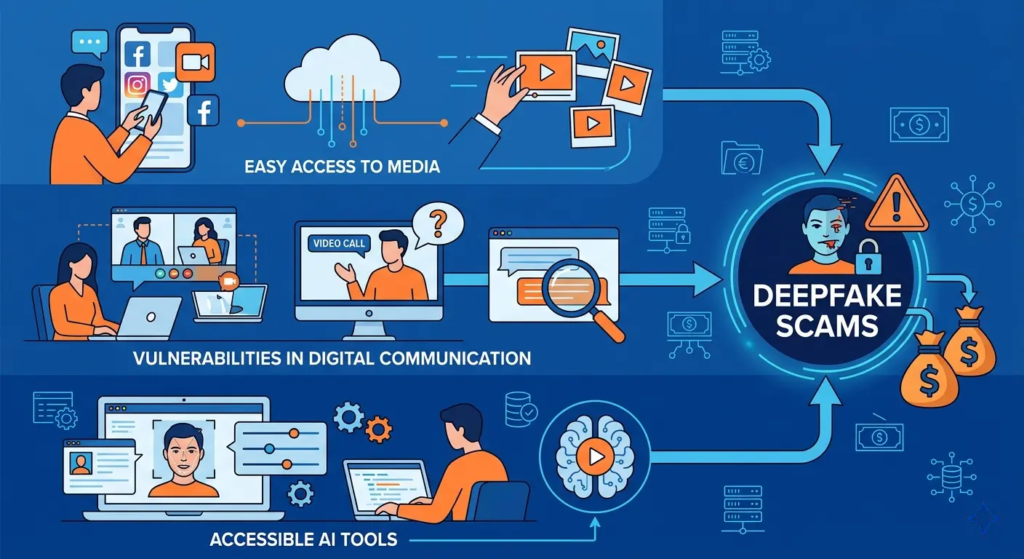
Several factors are fueling the rise of scams in the current digital world.
The explosion of social media has given cybercriminals easy access to thousands of photos, videos, and voice recordings of real people. Remote work culture has made employees more dependent on digital communication, reducing the chances of in person verification. Businesses are handling larger volumes of online transactions, creating more opportunities for fraudsters to strike. Artificial intelligence is becoming more accessible, meaning even people with basic technical skills can now create deepfakes.
This combination of easy access to data, advanced tools, and a digitally dependent workforce has created the perfect environment for deepfake scams to thrive.
What Are Deepfake Scams? A Simple Explanation
Before understanding how to fight them, it helps to understand what they actually are.
A deepfake is a piece of media, whether it is a video, an audio clip, or an image, that has been manipulated or entirely generated using artificial intelligence to make it appear real. The term comes from combining “deep learning,” a branch of AI, with “fake.” Deepfake scams occur when cybercriminals use this technology to impersonate real people, including executives, colleagues, or trusted figures, with the goal of deceiving victims for financial gain, data theft, or reputational damage.
The technology works by training an AI model on large amounts of real data such as photos and voice recordings of a specific person. The model then learns to mimic that person’s facial expressions, tone of voice, and speaking patterns. The result is a digital clone that can say or do things the real person never actually said or did.
Common Deepfake Scam Techniques Used by Cybercriminals
Cybercriminals have developed a range of creative and alarming methods to carry out deepfake scams. Here are some of the mostly used techniques.
- CEO Fraud via Fake Video Calls: Attackers create a deepfake video of a company’s chief executive and use it during a live or recorded call to instruct employees to transfer money, share confidential data, or approve fraudulent transactions without question.
- Voice Cloning Scams: Using just a few minutes of recorded audio, criminals clone a person’s voice and call employees or family members pretending to be someone they trust. The cloned voice sounds so real that it is nearly impossible to detect without proper verification.
- Fake Identity Verification: Cybercriminals use deepfake technology to bypass facial recognition systems used in banking, hiring platforms, and government services, essentially stealing someone’s digital identity.
- Phishing Campaigns with Deepfake Content: Fraudsters attach deepfake videos or audio messages to emails and social media posts to make phishing attacks more convincing. A fake video of a known leader endorsing a fraudulent investment scheme is one common example.
- Social Engineering via Fake Testimonials: Deepfake scams are also used to fabricate customer reviews, employee testimonials, or public statements from trusted individuals, manipulating people into trusting fake products, services, or narratives.
- Impersonation in Live Communication Tools: Some attackers use real time deepfake filters during video conferences to appear as a different person entirely, manipulating colleagues or partners during important business discussions.
How Deepfake Scams Work: A Step by Step Breakdown
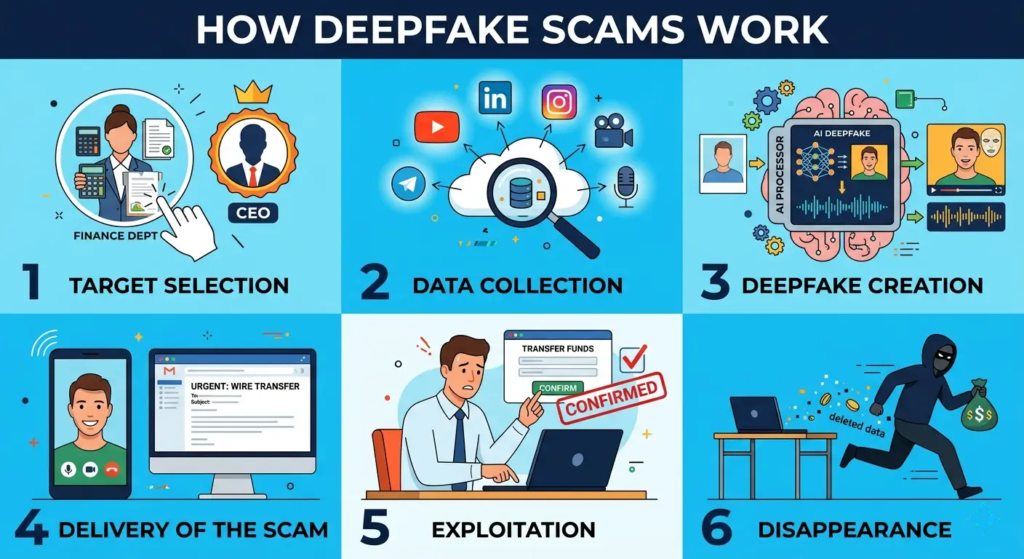
Understanding the process behind these attacks helps you recognize warning signs before it is too late.
- Target Selection: The attacker identifies a high value target such as a company’s finance department, a senior executive, or a trusted employee who has access to sensitive data or funds.
- Data Collection: The criminal gathers publicly available photos, videos, and voice recordings of the person they plan to impersonate, often sourced from social media, company websites, or public interviews.
- Deepfake Creation: Using AI powered tools, the attacker generates a realistic fake video or audio clip of the impersonated person, making it appear as though they are giving specific instructions.
- Delivery of the Scam: The deepfake content is delivered through email, phone calls, video platforms, or messaging apps. The message typically creates urgency, such as a time sensitive fund transfer or a confidential data request.
- Exploitation: The victim, believing the communication to be genuine, follows the instructions and unknowingly hands over money, sensitive information, or system access to the attacker.
- Disappearance: Once the transaction is complete or the data is stolen, the attacker vanishes, leaving behind little to no traceable evidence.
Real World Impact of Deepfake Scams on Businesses and Individuals
The damage caused by deepfake scams extends far beyond financial losses. Here is a look at the wide ranging consequences.
- Businesses have lost millions of dollars through fake wire transfers initiated by impersonated executives in what is commonly known as Business Email Compromise or BEC attacks amplified by deepfakes.
- Employee trust and workplace morale suffer significantly when internal communications can no longer be fully trusted.
- Companies face severe reputational damage if deepfakes of their leaders go viral with false or damaging statements.
- Individuals become victims of identity theft, leading to long term legal and financial complications.
- Sensitive corporate data including trade secrets and client information can be leaked or sold on the dark web.
- Regulatory and legal consequences arise when companies fail to protect themselves, resulting in heavy fines and compliance violations.
How to Protect Yourself and Your Business from Deepfake Scams
Staying safe from deepfake scams requires a mix of technology, policy, and personal awareness. Here are practical and actionable tips every student and professional should know.
- Always verify unexpected requests for money or sensitive data through a second channel such as a direct phone call to a known number rather than replying to the message itself.
- Establish a code word or verification protocol within your team for confirming high stakes instructions, especially those involving financial transactions.
- Invest in deepfake detection tools that use AI to identify manipulated media before acting on it.
- Limit the amount of personal audio and video content shared publicly on social media, as this data is the raw material that criminals use to build deepfakes.
- Train employees regularly on how to recognize social engineering tactics and raise awareness about the existence and dangers of deepfake scams.
- Implement strong multi factor authentication across all platforms to reduce the risk of unauthorized access even if an identity is compromised.
- Report suspicious activity to your organization’s cybersecurity team immediately without attempting to handle it alone.
Why Cybersecurity Awareness Is the Most Powerful Defense
Technology alone cannot fully protect us from deepfake scams. The most important layer of defense is the human mind. Cybercriminals rely heavily on psychological manipulation, creating urgency, exploiting authority, and triggering emotions like fear and trust to bypass logical thinking.
This is called social engineering, and it works because humans are naturally inclined to trust familiar faces and voices. When someone who looks and sounds like your boss gives you an instruction, your brain wants to comply. Cybercriminals know this and design their attacks to exploit exactly that instinct.
Building a culture of skepticism and verification within organizations is critical. Students entering the workforce today must understand that asking questions and double checking identities is not rude but responsible. Cybersecurity awareness training should be treated as an essential life skill, not an optional workplace activity. When people understand the tactics used against them, they become significantly harder to deceive.
Conclusion
Deepfake scams represent one of the most sophisticated and psychologically complex threats in today’s digital landscape. As AI technology becomes more powerful and accessible, these scams will only grow more convincing and more dangerous. For students and young professionals, the key takeaway is this: never act on urgency alone, always verify, and always stay informed. Awareness is your strongest shield. In a world where seeing is no longer believing, critical thinking and digital literacy are not just valuable skills but essential ones. Stay curious, stay cautious, and never stop learning about the threats that shape the world you are entering.